Afro Woman of Prayer 2
First Impressions: Quiet Strength, Clear Silhouette
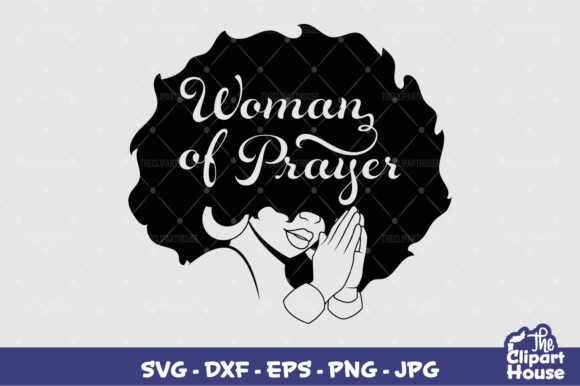
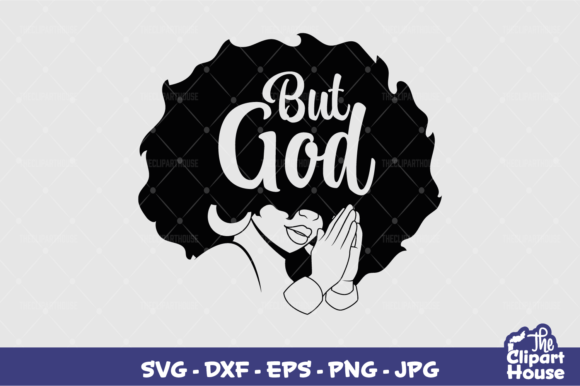
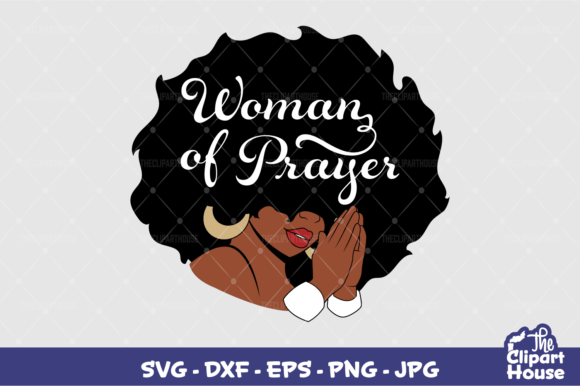
When Afro Woman of Prayer 2 appeared on my screen—clean, centered, and softly detailed—I paused. This isn’t a loud or ornate design. It’s a composed profile: head bowed, hands folded, hair rendered with gentle contour lines rather than dense texture. The shape reads clearly at small sizes, and the negative space around her form feels intentional—not empty, but reverent. As a designer who regularly selects embroidery files for client work and boutique merchandise, I immediately saw its potential in soft, meaningful contexts: a linen tea towel for a new mother, a cotton apron for a faith-based kitchen shop, or a baby onesie where subtlety matters more than sparkle.
Where It Lives Best: Real Projects, Real Fabric
I tested Afro Woman of Prayer 2 as the focal point on a natural cotton tote bag—medium-weight, unbleached, lightly textured. Stitched at 3.8" wide with standard polyester thread and medium tear-away stabilizer, it held beautifully. The curves of the afro translated smoothly into satin stitch, and the folded hands read cleanly without crowding. No puckering. No skipped stitches. That tells me this is a well-digitized machine embroidery design—not rushed, not over-complicated.
It also worked thoughtfully on a lightweight sweatshirt hoodie (cotton/poly blend), though I swapped to cutaway stabilizer underneath and reduced stitch density slightly in the outer hair outline. Why? Because heavy fill areas can stiffen knits unnaturally. Afro Woman of Prayer 2 avoids that trap—it uses open contours and strategic spacing instead of solid fills, so it breathes on apparel. That’s rare in spiritual-themed graphics and makes it ideal for custom apparel, embroidered patches, and even nursery decor where comfort and tactility matter.
Where to Pause—and Why
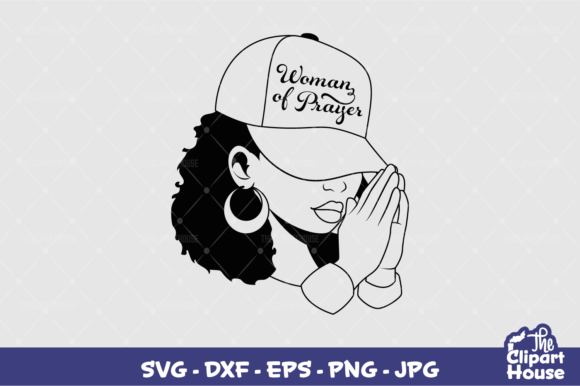
This design shines on stable, flat surfaces: tote bags, pillow covers, tea towels, stationery inserts, and flat iron-on patches. But I’d hesitate to use it full-size on curved or tight spaces like baseball caps or baby beanies without testing first. The upper curve of the head and the delicate line defining the prayerful posture don’t adapt easily to extreme curvature—stitch distortion becomes visible fast.
On thin or stretchy fabrics—think ribbed knit onesies or lightweight rayon blouses—I recommend using a light fusible topping *in addition* to stabilizer. Afro Woman of Prayer 2 has fine connecting lines between fingers and subtle facial cues; those can blur if the fabric shifts mid-stitch. Also, avoid placing it near seams or darts unless you’re confident in your hooping technique. Its quiet dignity gets lost when fighting fabric tension.
And while it’s listed for heat transfer printing and stickers, remember: embroidery and print are different languages. What reads clearly as a printable graphic may need simplification for stitch clarity. If you’re adapting Afro Woman of Prayer 2 from a PNG or SVG into an embroidery file yourself, watch the inner hand detail—those small gaps between fingers often close up in auto-digitizing unless manually adjusted.
What It Adds to Your Finished Product
Afro Woman of Prayer 2 elevates handmade product perception—not through flash, but through intention. Customers notice when a design feels considered, not copied. On Etsy, I’ve seen similar themes sell consistently when paired with thoughtful presentation: a neutral linen pouch, a handwritten note about intentionality, a photo showing the embroidery’s soft drape—not just a white-background mockup. This design supports that authenticity.
It builds trust, especially for faith-based or culturally rooted small shops. There’s no caricature, no exaggerated feature—just quiet reverence. That translates directly to buyer engagement: people pause longer, share more, and return for related items (like coordinating scripture-themed tea towels or matching baby caps). For craft fairs or local boutiques, it helps unify branding without shouting. You’re not selling “a black woman”—you’re offering presence, peace, and personal resonance.
Practical Designer Notes Before You Stitch
- Always test on scrap fabric first—especially if pairing with dark garments. The design’s contrast relies on thread color choice, not bold outlines.
- Review stitch density before final hooping. Dense areas cluster near the hairline and folded hands; adjust if embroidering on delicate fibers.
- Confirm hoop size compatibility. While scalable, shrinking Afro Woman of Prayer 2 below 2.5" risks losing definition in the hands and facial contour.
- Inspect small details at actual stitch size. Zoom in on your embroidery software—look for floating threads or underlay gaps near the wrist and chin.
- Test black-and-white mockups to gauge how it reads without color context—this reveals true visual weight and balance.
- Compare light vs. dark backgrounds in your digital preview. Some subtle gradients may vanish on black fabric unless you boost thread contrast intentionally.
- Use appropriate stabilizer: medium tear-away for stable wovens, cutaway for knits, and lightweight fusible for sheer or slippery fabrics.
- Verify licensing before selling finished items or bundling Afro Woman of Prayer 2 as part of a digital embroidery file pack. Since it’s categorized under Graphics and Crafts, commercial use terms may vary by seller—don’t assume.
Final Thought: A Design That Serves the Maker—and the Moment
Afro Woman of Prayer 2 isn’t flashy. It won’t dominate a tradeshow booth from across the room. But in the hands of a thoughtful designer or small business owner, it becomes something quietly powerful: a signature touch on a holiday gift, a grounding element in a baby’s nursery set, or the soulful center of a custom-embroidered apron for a Black-owned café. It works because it respects both the craft and the context—no over-engineering, no visual noise, just clean, human-centered design language.
If you’re choosing embroidery files for real projects—not just digital collections—this one earns its place in your working library. Not as filler. Not as trend bait. But as a reliable, resonant tool for making things that matter.